
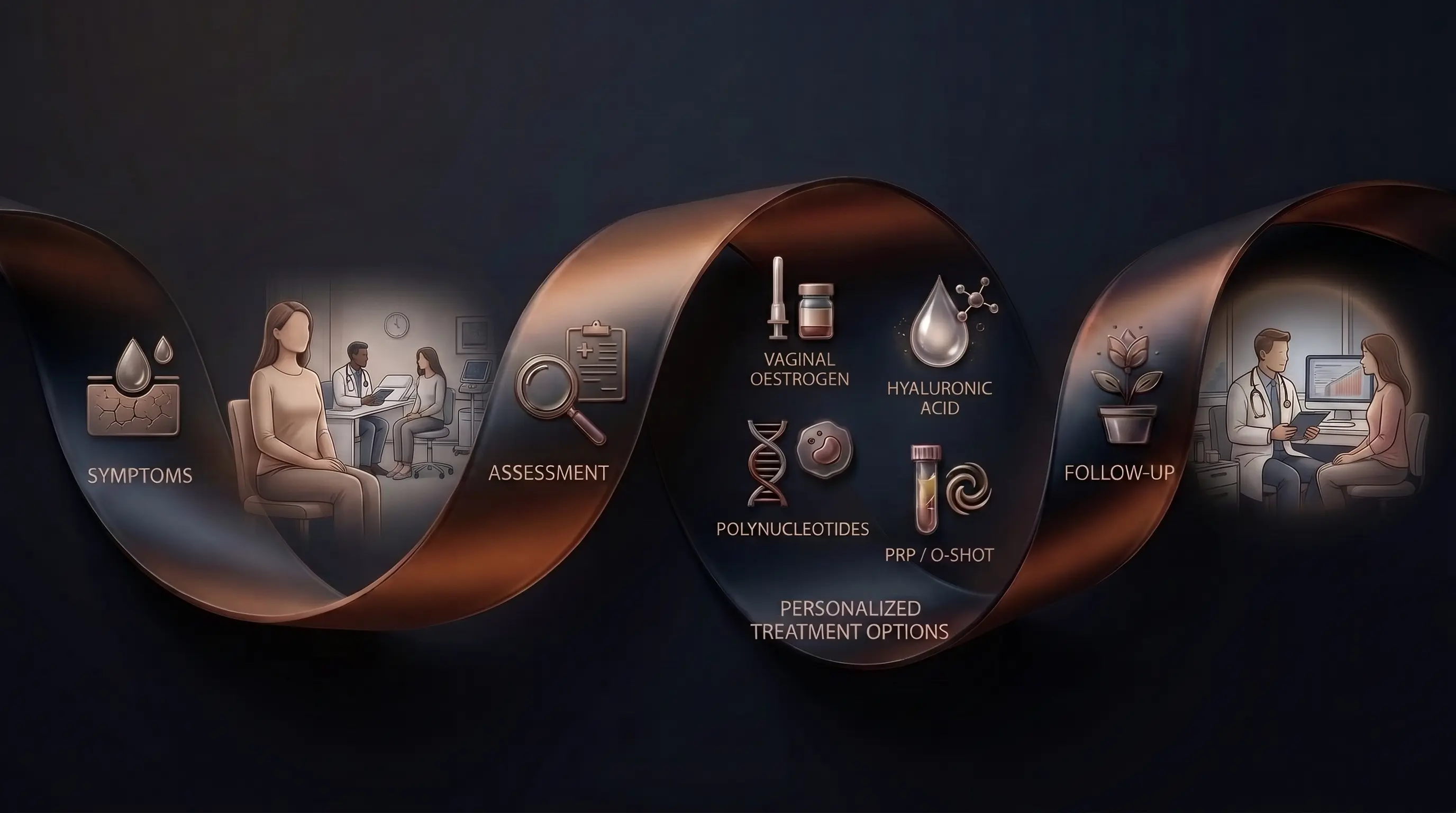
Vaginal dryness can affect comfort, confidence, urinary symptoms and intimacy. Learn about established and emerging treatment options, from vaginal oestrogen to injectable hyaluronic acid, polynucleotides and PRP.
Vaginal Dryness Treatment: Vaginal Oestrogen, Hyaluronic Acid, Polynucleotides and the O-Shot
Vaginal dryness may begin as mild irritation. But when intimacy becomes painful, confidence changes and avoiding sex feels easier than discussing the problem, it can start affecting much more than physical comfort.
Many women believe vaginal dryness is an unavoidable part of menopause or ageing. In reality, it is a common medical concern with several possible causes and treatment options.
These may include vaginal moisturisers, lubricants, local vaginal oestrogen and emerging treatments such as injectable hyaluronic acid, polynucleotides and platelet-rich plasma, commonly called the O-Shot.
The right treatment begins with understanding the cause.
Vaginal Dryness Is More Than Reduced Lubrication
During and after menopause, falling oestrogen levels can affect the vagina, vulva, urethra and bladder. This is known as genitourinary syndrome of menopause, or GSM.
Symptoms may include:
- dryness, burning or irritation;
- pain during sexual intercourse;
- reduced natural lubrication;
- small tears or bleeding after intimacy;
- urinary discomfort or urgency;
- recurrent urinary symptoms;
- reduced sexual confidence or sensation.
Unlike hot flushes, these symptoms may persist or gradually worsen without treatment.
Menopause is not the only cause. Vaginal dryness may also occur during breastfeeding, after some cancer treatments, because of medication, inflammatory skin conditions or reduced arousal.
Persistent bleeding, unusual discharge, sores, severe pain or visible skin changes should always be medically assessed.
When Dryness Starts Affecting Intimacy
Pain during sex can create a difficult cycle:
dryness causes discomfort → discomfort creates anxiety → anxiety reduces arousal → reduced arousal increases dryness and pain.
A woman may then avoid intimacy because she expects it to hurt. Her partner may interpret this as rejection or loss of attraction, particularly when the subject feels too embarrassing to discuss.
Vaginal dryness is not psychological, but its impact can become emotional and affect relationships, confidence and quality of life.
Vaginal Oestrogen
For menopausal vaginal dryness, local vaginal oestrogen is an established treatment.
It may be supplied as a cream, tablet, pessary, gel or vaginal ring. It delivers a low dose directly to the vaginal tissues, with very little entering the bloodstream.
NICE recommends vaginal oestrogen for genitourinary symptoms associated with menopause. It may take several weeks, and sometimes up to three months, to achieve its full effect.
Can vaginal oestrogen be used long term?
For many women, yes.
It may be continued for as long as needed, with appropriate medical review. Symptoms often return after stopping because treatment manages the effects of reduced oestrogen rather than permanently reversing menopause.
Women with unexplained vaginal bleeding, a history of hormone-sensitive cancer or other relevant medical conditions may require specialist advice.
Vaginal oestrogen should not automatically be regarded as dangerous because it contains a hormone. For suitable patients, it remains one of the best-established treatments for menopausal vaginal dryness.
What If Oestrogen Is Not Suitable or Not Preferred?
Some women cannot use vaginal oestrogen, prefer a non-hormonal option or continue to experience symptoms despite moisturisers, lubricants and prescribed treatment.
This has increased interest in newer injectable treatments. However, newer does not necessarily mean better, and the strength of evidence differs between treatments.
Patients should understand what is established, what is emerging and what remains uncertain.
Vaginal Hyaluronic Acid
Hyaluronic acid attracts and retains moisture.
Topical hyaluronic acid gels and moisturisers may help some women with vaginal dryness. Injectable hyaluronic acid is a newer option in which the product is placed into selected vulvovaginal tissues with the aim of improving hydration, comfort and tissue quality.
Early studies are encouraging, but injectable vaginal hyaluronic acid is not currently considered standard first-line treatment.
Possible risks include discomfort, swelling, bruising, bleeding, infection, tenderness and unevenness.
Polynucleotide Treatment
Polynucleotides are injectable products used with the aim of supporting hydration, tissue quality and cellular repair.
Although they are increasingly used in regenerative medicine, robust clinical evidence specifically for vaginal dryness remains limited.
Polynucleotides should therefore be presented as an emerging treatment, not as a proven replacement for vaginal oestrogen.
Patients should understand the proposed treatment plan, number of sessions, potential risks, aftercare and limitations of the evidence.
The O-Shot and PRP
The O-Shot is a commonly used name for an intimate treatment involving platelet-rich plasma, or PRP.
A small blood sample is processed to concentrate the platelets, and the PRP is injected into selected vulvovaginal tissues.
Early research suggests possible benefits for vaginal symptoms and sexual function. However, studies remain relatively small, treatment methods vary and more high-quality research is needed.
PRP should therefore be described as an emerging treatment rather than a proven cure.
Possible risks include pain, bruising, bleeding, swelling, infection and temporary discomfort. Results vary and cannot be guaranteed.
Which Treatment Is Best?
There is no single treatment that suits every woman.
The most appropriate option depends on:
- the likely cause of dryness;
- whether menopause is involved;
- the severity and duration of symptoms;
- urinary or vulval symptoms;
- pain during intercourse;
- previous treatments;
- medical and cancer history;
- personal preferences;
- the strength of evidence behind each option.
For some women, moisturisers and lubricants may be enough. For others, vaginal oestrogen may be the most appropriate evidence-based treatment.
Selected patients who cannot use oestrogen, prefer not to use it or have not achieved sufficient relief may wish to discuss injectable hyaluronic acid, polynucleotides or PRP after understanding the limitations.
In some cases, referral to a menopause specialist, gynaecologist, dermatologist, pelvic-health physiotherapist or psychosexual therapist may be more appropriate than an injection.
Treatment Should Address the Woman, Not Just the Symptom
A good consultation should explore how the symptoms affect comfort, daily life, intimacy, urinary health and emotional wellbeing.
For many women, being able to discuss vaginal dryness openly and without embarrassment is an important first step.
Vaginal dryness is common. Suffering silently should not be.
Explore Vaginal Dryness Treatment at Your Nearest Clinic
Healing-PRP Clinics provides private, doctor-led consultations for vaginal dryness and women’s intimate health at three locations:
- [Vaginal dryness treatment in St Albans]
- [Vaginal dryness treatment in Birmingham]
- [Vaginal dryness treatment in Hampstead, London]
Depending on clinical suitability, treatment options may include vaginal hyaluronic acid, polynucleotides and PRP-based treatment such as the O-Shot.
Choose your nearest clinic to learn more or arrange a confidential consultation.
Individual results vary. Injectable hyaluronic acid, polynucleotides and PRP for vaginal dryness are emerging treatments, and the available evidence is more limited than for established therapies such as vaginal oestrogen. No treatment can guarantee a particular result.
References
- NICE: Menopause—identification and management
- NHS: Vaginal oestrogen
- British Menopause Society: Genitourinary Syndrome of Menopause
- Research on hyaluronic acid injection for vulvovaginal atrophy
- Research reviews on PRP and injectable treatments for vulvovaginal atrophy